
Research strengthens action against illegal trade in wild falcons.
An innovative DNA-based forensic tool developed by scientists in Scotland is helping to tackle wildlife crime and protect one of the UK's most iconic birds of prey.
Researchers at the Scottish Government's Science and Advice for Scottish Agriculture (SASA) division in collaboration with teams at the University of Leicester and the University of Sheffield have published details of a method that can determine whether Peregrine Falcons claimed to have been bred in captivity are genuinely captive-bred or have been taken illegally from the wild.
Peregrine Falcons are protected in the UK, but concerns have grown in recent years about the illegal removal of birds from the wild due to falconry becoming increasingly popular over the past two decades. This has coincided with a significant increase in the export of falcons from the UK and prompted concerns about potential illegal wild take.
The project to develop DNA tools suitable for use in criminal investigations began at SASA in 2020. A further programme of work was launched in 2021 to build a DNA database of wild Peregrine Falcons, with licensed volunteers collecting samples from nests across the country.
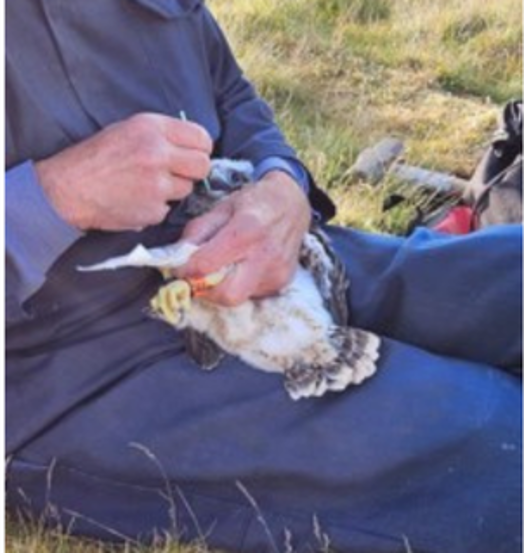
Steve Downing, Chairman Northern England Raptor Forum and volunteer said:
"Despite decades of legal protection Peregrine Falcons continue to be threatened by individuals determined to take them from the wild to launder through the captive breeding trade. Whilst preventing the crimes is difficult the partnership between licenced volunteer Raptor Workers, who collect DNA samples from the wild population, and the scientists who have developed the DNA database provides an invaluable tool for the Police who investigation these crimes."
The project to develop DNA tools suitable for use in criminal investigations began at SASA in 2020. A further programme of work was launched in 2021 to build a DNA database of wild Peregrine Falcons, with licensed volunteers collecting samples from nests across the country.
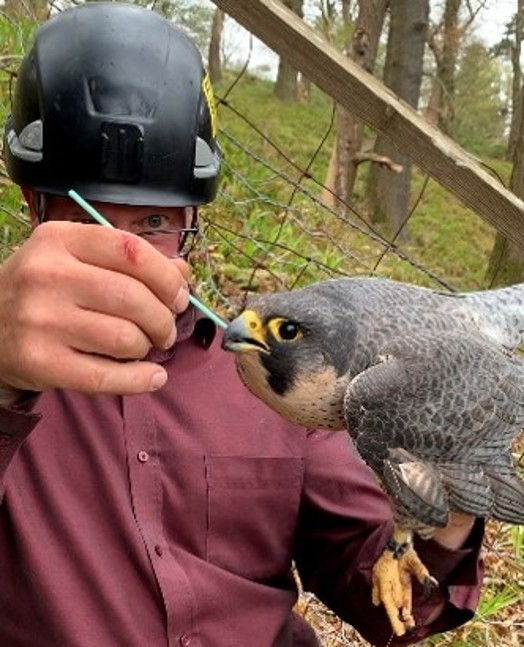
George Smith, Scottish Raptor Study Group and a volunteer said:
"As one of the many volunteers collecting the samples that contribute to the now large database, I am very pleased that the samples collected have enabled the development of the DNA-based forensic tool which is helping with the identification of potential wildlife crime incidents, enabling more robust protection to a species loved by many which faces diverse challenges in an ever changing environment"
The newly published research outlines the forensic validation of the method and highlights a major Scottish case study demonstrating its practical application.
The technology is now used routinely by the Animal and Plant Health Agency (APHA) to support compliance checks within the captive breeding sector and has been successfully applied in ten police investigations. In several cases, illegally taken peregrines have been linked back to specific nests.
The project reached a significant milestone in 2026, with the wild peregrine DNA database now containing more than 1,000 samples. A further 500 samples have been collected from captive falcons by APHA, creating the most comprehensive resources of its kind.
Lucy Webster, Wildlife DNA Forensics team said:
“We are extremely grateful to the licensed volunteers across the country whose time, expertise and dedication in collecting samples have allowed us to create such a robust database. This method provides a powerful, practical tool to identify those birds taken illegally from the wild, as well as confirming compliance by many breeders.”
The work supports the Scottish Government's commitment to tackling wildlife crime and restoring biodiversity, while demonstrating how public investment in science can strengthen environmental protection and support enforcement efforts. The project was supported through funding from Defra.
The full paper is available on ScienceDirect
Published on: 5 November, 2026