
Supporting guidance for Wader Grazed Grassland
Date published: 19 February, 2026
For recent changes to this guidance, please see the bottom of the page.
Introduction
The wader group includes birds such as oystercatcher, lapwing, redshank, curlew and snipe. To survive and breed successfully, waders need:
- A safe nesting site. Most waders nest in short or structurally diverse grassland
- An abundance of soil and ground insects
- Damp or wet feeding areas, especially for chicks
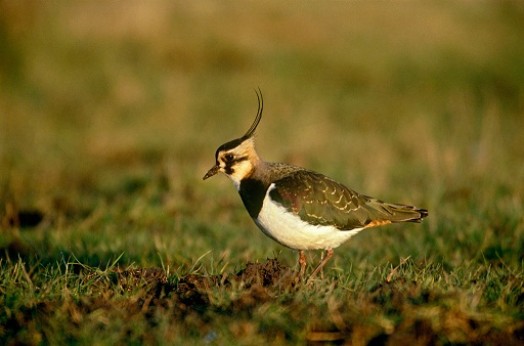
Lapwing – Credit: Chris Gomersall – © RSPB images
The Wader Grazed Grassland option aims to provide nesting and feeding opportunities for waders. The timing and intensity of grazing determines the structure and plant composition of the sward, which in turn influences insect numbers and bird usage.
Patchy swards, which vary in height, provide suitable feeding and nesting habitat. Short grazed areas (less than 10 centimetres) provide easy access to food and open terrain to enable vigilance against predators. Taller vegetation allows nesting birds and chicks to conceal themselves, and generally supports more insects and other wildlife.
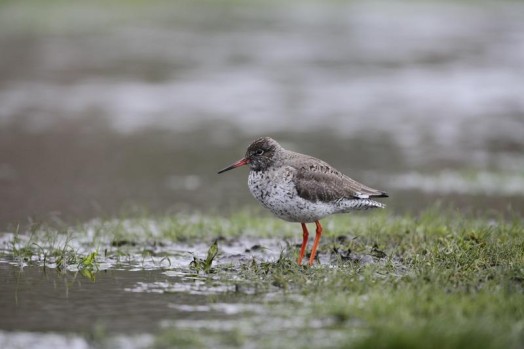
Redshank – Credit: Andy Hall – © RSPB images
What needs to be done
Excluding or restricting livestock numbers and avoiding mechanical operations (such as fertiliser spreading, harrowing, rolling and topping) during the breeding season will help improve wader breeding success.
Grazing: You must choose one of the three grazing regimes available under this option. If you opt for one of the six-week grazing breaks, but birds are still nesting in the field following the exclusion period, you must not graze at a high stocking rate until all chicks have fledged. If you operate a system of mob/adaptive grazing on your holding, any fields managed under this option must not have large numbers of stock put back on the field until young birds have fledged.
Although the third grazing option allows grazing levels of up to 1lu/ha over the nesting period, a grazing level of between 0.3 and 0.6/ha is preferable to protect nests from trampling.
Consider what type of livestock will be put onto the field after the grazing exclusion. Large numbers of sheep and groups of young, boisterous cattle are more likely to trample nests.Grazing is required outside the exclusion / restriction period to maintain a suitable sward for nesting in the following season, as birds require a short sward prior to nesting.
Which fields to choose
Fields which contain boggy areas and wet flushes are more likely to remain damp into June. These should be prioritised as they provide ideal nesting sites and food-rich areas for adults and chicks.
Fields can be enhanced by creating wader scrapes to increase food availability during the summer months. See the Creation of Wader Scrapes capital item for more details. If you have created wader scrapes then these require to be maintained during the contract period. Further information on maintenance can be found within the supporting guidance for the Creation of Wader Scrapes capital item.
Waders are more likely to select unimproved or semi-improved grasslands than improved grasslands. Highly productive rye-grass leys are unlikely to support nesting waders, as the sward grows too high too quickly, therefore, avoid these fields and choose older grass swards.
The area of ground submitted for the option should be at least one hectare, although areas greater than three hectares that may cross field boundaries and are without boundary features will be of more benefit, especially on larger farms.
Research has shown that waders avoid nesting and feeding in areas close to tall trees and hedges. Therefore you should keep the managed area at least 30 metres from any line or group of trees or hedgerows, and you should not plant new hedges between fields entered into this management option.
Note on VPS Wader Points:
VPS wader points will only be awarded where the option is located in appropriate locations as described in the supporting guidance for VPS waders. For clarity, we will only award wader VPS points where no land within 30 metres of any scrub, hedgerow, or line/clump of trees is proposed for management.
In any other circumstances, a 30 metre buffer must be left between the scrub, hedgerow, or line/clump of trees and the area proposed for wader management, to enable us to award VPS wader points. You will not be paid management on the buffer area. The 30 metre 'buffer' strips must be clearly shown on your management map with the width labelled.
Fields adjacent to blocks of woodland / plantations should not be included in the application if you want to gain VPS points, even if 30m buffers are included in the proposal.
Rushes are common in wet areas and will often require annual management. Scattered rushes provide adults and chicks with protection from the elements, nesting sites and cover from predators. However, waders also need short, open areas for their chicks to walk through where they can see approaching predators. Areas with heavy infestations of rush or thatched vegetation tend to be avoided, so if you choose a field with heavy rush cover, this must be addressed in your application by including rush cutting, aiming for around 30% rush cover across the area.
Knowing if you have 'too much' rush and what the 'right amount' of rush is will depend on the species you are managing for – the RSPB’s advisory leaflets provide detailed information on the needs of each species.
It is worth bearing in mind that sward and water level variations across larger fields means that you can often create conditions for more than one species.
Payments are available through the Cutting of Rush Pasture capital item for areas needing control. Note, however, that control methods and timings will need to be planned to meet the requirements of the Wader Grazed Grassland option.
Further information
Different species of waders have differing habitat preferences, particularly relating to sward height, structure and soil dampness. Therefore, if you are considering this option, you need to understand the habitat requirements of the particular species you have on your land, and how you can best manage your land to conserve them.
Further advice on four common farmland waders is available at the following links:
Further advice on helping waders on farmland is on the FAS website.
The integration of grazing management with other options, such as Wader and Wildlife Mown Grassland,and capital items such as Creation of Wader Scrapes may well be appropriate.
Getting advice
There are a number of wader-focused projects whose staff will be able to provide advice on waders and their management. To find your local advisor, contact your local NatureScot office.
Recent changes
| Section | Change |
|---|---|
| What needs to be done | Grazing: Text updated to make it clearer when to resume grazing and by how much if there still birds that have not fledged present after the grazing break. Text added, If you operate a system of mob/adaptive grazing on your holding, any fields managed under this option must not have large numbers of stock put back on the field until young birds have fledged. Consider what type of livestock will be put onto the field after the grazing exclusion. Large numbers of sheep and groups of young, boisterous cattle are more likely to trample nests. |
| What fields to choose | Text added, Rushes: so if you choose a field with heavy rush cover, this must be addressed in your application by including rush cutting, aiming for around 30% rush cover across the area. |
| Further information | Broken links for RSPB pages Lapwing, Snipe, Redshank and Curlew updated. |
Previous versions
Download guidance
Click 'Download this page' to create a printable version of this guidance you can save or print out.